


Coś Wielkiego Nadchodzi: Matt Shumer Ostrzega – Rewolucja AI Większa Niż COVID
Meta description: 26-letni CEO HyperWrite ostrzega: AI już go zastąpiło w pracy. Esej „Something Big is Coming” (60M+ wyświetleń) porównuje moment do lutego 2020. GPT-5.3-Codex ma „gust”. Analiza 2026.
🔍 Czym jest „Moment Lutego 2020” w AI?
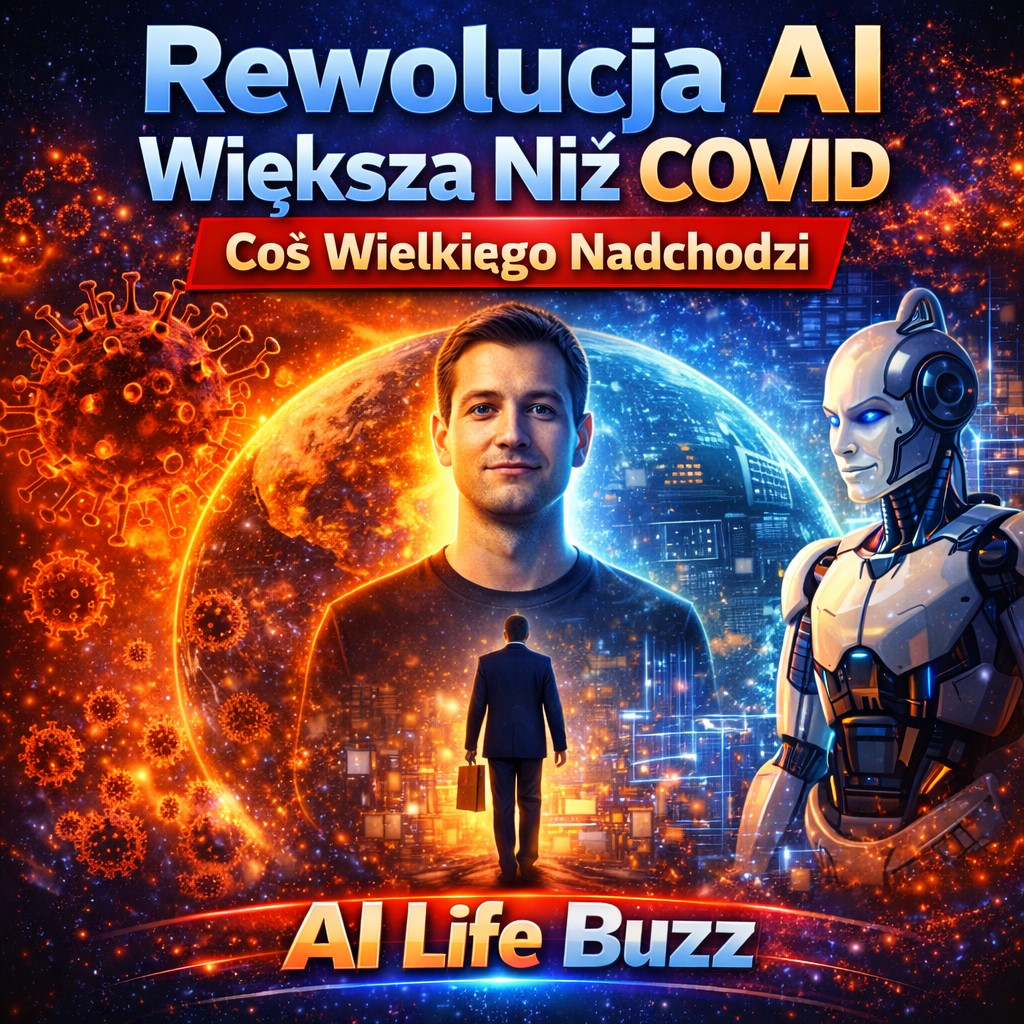
Definicja: „Moment lutego 2020” to analogia do okresu tuż przed pandemią COVID-19, gdy większość ludzi bagatelizowała nadchodzącą zmianę – opisująca obecny stan publicznej świadomości o nadchodzącej rewolucji AI.
W praktyce: W lutym 2020 słyszałeś o „jakimś wirusie w Chinach”, ale życie szło normalnie. Trzy tygodnie później – lockdown, praca zdalna, maseczki, świat się zmienił overnight. Matt Shumer twierdzi: jesteśmy dokładnie w tym momencie, ale tym razem chodzi o AI, nie o wirus.
Przykład porównania:
- Luty 2020: „Ten COVID to chyba przesada” → Marzec 2020: Lockdown globalny
- Luty 2026: „AI to ciekawy gadżet” → 2027-2028: 50% entry-level white-collar jobs znika?
Różnica kluczowa: COVID był biologicznym zdarzeniem losowym. AI to technologia rozwijająca się wykładniczo i przewidywalnie. Jeśli Shumer ma rację, nie możemy powiedzieć „nikt nie mógł przewidzieć” – bo ostrzeżenia są JUŻ.
Znane również jako: AI inflection point, the „before” moment, pre-disruption phase, „last call” warning
📖 Spis treści
- Kim Jest Matt Shumer i Dlaczego Warto Go Słuchać?
- Główna Teza: „Much Bigger Than COVID”
- GPT-5.3-Codex: AI Które „Zastąpiło” Swojego Twórcę
- Co Konkretnie Się Zmienia? Trzy Breakthrough Moments
- 50% Entry-Level Jobs w 1-5 Lat: Realistyczne Czy Hype?
- Kontrowersje: Gary Marcus i Krytycy Odpowiadają
- Praktyczne Porady: Co Robić Już Teraz
- Polski Kontekst: Czy To Dotyczy Polskiego Rynku?
- FAQ
- Podsumowanie
TL;DR
- Matt Shumer (26 lat, CEO HyperWrite/OthersideAI) opublikował viralowy esej „Something Big is Coming” – 60M+ wyświetleń w 4 dni
- Główna teza: Jesteśmy w „lutym 2020 moment” dla AI – większość nie dostrzega skali nadchodzącej zmiany
- Personal proof: GPT-5.3-Codex zastąpiło Shumera w jego własnej pracy technicznej – „zostawiam komputer na 4h, wracam, kod gotowy”
- Quantified threat: 50% entry-level white-collar jobs może zniknąć w 1-5 lat (Anthropic CEO Dario Amodei agrees)
- Breakthrough: Nowe modele (GPT-5.3, Opus 4.6) mają coś jak „judgment” i „taste” – nie tylko technical correctness
- Kontrowersje: Gary Marcus i inni badacze krytykują za przesadę, selective data cherry-picking, ignorowanie hallucinations
- Ironia: Shumer użył Claude do napisania eseju o AI – „that’s kind of the point”
- Actionable advice: (1) Start używać AI seriously ($20/mies Claude/ChatGPT), (2) Financial resilience (oszczędności, no new debt), (3) Lean into what’s hard to replace (relationships, physical work, licensed accountability)
👤 Kim Jest Matt Shumer i Dlaczego Warto Go Słuchać?
Nie Typowy AI Doomer
Matt Shumer to 26-letni serial entrepreneur i investor (GP w Shumer Capital).
Track record:
- 2020: Co-founder OthersideAI → stworzyli HyperWrite (AI autocomplete writing tool)
- 2024: Kontrowersja z open-source modelem (over-promised performance, później przeprosił: „got ahead of myself”)
- 2026: Viral essay autor z 60M+ views
Dlaczego ludzie słuchają?
1. Skin in the game
- To nie academic czy theorist
- CEO firmy AI która już używa najnowszych modeli production
- Jego własna praca została zautomatyzowana – nie teoretyzuje, żyje tym
2. Age matters
- 26 lat = dopiero początek kariery
- „Nie wiem ile lat kariery mi zostało jeśli to wszystko się ziści”
- Nie broni status quo – sam jest ofiarą disruption
3. Writing for „non-tech friends and family”
- Nie pisze dla AI insiderów (którzy already know)
- Target: jego ojciec (prawnik, kilka lat do emerytury, „hopes to run out the clock”)
- Accessible language, personal stories, not jargon
Controversial Past
Important context:
W 2024 Shumer promoted open-source model z claims o performance. AI researchers odkryli że didn’t live up to claims. Shumer apologized.
Gary Marcus (AI skeptic, NYU professor) używa tego jako argument że Shumer „likes to sell big” i ma track record exaggerated claims.
Ale: To nie dyskwalifikuje current essay – trzeba ocenić argumenty, nie ad hominem.
🌊 Główna Teza: „Much Bigger Than COVID”
Analogia Pandemii
Shumer’s framing:
„I think we’re in the 'this seems overblown’ phase of something much, much bigger than COVID.”
Timeline comparison:
Luty 2020:
- Nieliczni eksperci ostrzegają o wirusie w Wuhan
- Większość: „To przesada”, „Nie dotrze do nas”, „Media hype”
- Życie idzie normalnie
Marzec 2020:
- Lockdown globalny
- Zmiana overnight
- „Nikt nie mógł przewidzieć” (ale warning signs były)
Luty 2026 (TERAZ):
- Eksperci AI (Amodei, Musk, Shumer) ostrzegają o job displacement
- Większość: „AI to narzędzie”, „Ludzie zawsze znajdą pracę”, „Tech hype”
- Życie idzie normalnie
2027-2028?
- Mass unemployment white-collar workers?
- Entry-level jobs znikają?
- „Nikt nie mógł przewidzieć” ← ALE MOŻNA
Dlaczego „Bigger Than COVID”?
COVID:
- Temporary disruption (lockdowns ended)
- Jobs mostly returned (choć remote work stayed)
- Reversible
AI displacement:
- Permanent (jobs don’t come back)
- Accelerating (improves every quarter)
- Universal cognitive work substitute
- Irreversible
Quote z Shumer:
„Even if there is just a 20% chance of this happening, people deserve to know and have time to prepare.”
💻 GPT-5.3-Codex: AI Które „Zastąpiło” Swojego Twórcę
Turning Point: Last Week’s Release
Co się stało:
OpenAI wypuściło GPT-5.3-Codex (luty 2026).
Official release notes (OpenAI):
„Our first model that was instrumental in creating itself.”
Read that again. AI helped build next version of AI.
Shumer’s Experience
Przed GPT-5.3:
- AI: helpful assistant, speeds up coding
- Shumer: reviews, fixes bugs, makes decisions
- Human still in charge
Po GPT-5.3:
Workflow Shumera TERAZ:
- Rano: Opisuje co chce zbudować (plain English, „vibe coding”)
- Zostawia komputer na 4 godziny
- Wraca: Kod gotowy, tested, deployed
- Zero oversight needed
Quote:
„It wasn’t just executing my instructions. It was making intelligent decisions. It had something that felt, for the first time, like judgment. Like taste. The inexplicable sense of knowing what the right call is that people always said AI would never have.”
„Taste” & „Judgment” – Co To Znaczy?
Technical correctness vs Aesthetic judgment:
Example (coding):
Before:
- AI: writes functional code
- Human: „Hmm, to działa ale… structure could be better, naming conventions off, not idiomatic”
- Human refactors
Now (GPT-5.3):
- AI: writes functional code that looks like senior dev wrote it
- Proper abstractions, clean architecture, idiomatic patterns
- „Tastes good”
Analogy:
- Old AI = techniczny rysownik (draws what you specify, accurate but soulless)
- New AI = architect (understands intent, makes aesthetic calls, has style)
Recursive Self-Improvement
Kluczowy insight:
AI labs celowo focused on coding first, bo:
- Building AI requires massive amounts of code
- If AI can code → AI can help build next AI
- Recursive improvement loop → exponential progress
Current state:
- GPT-5.3 helped create GPT-5.3 (parts of itself)
- Next version (GPT-6?) will be created mostly by AI
- Human role: direction, not implementation
Implication: Progress speed is no longer limited by human coding capacity.
🚀 Co Konkretnie Się Zmienia? Trzy Breakthrough Moments
1. From „Copilot” to „Autopilot”
Old paradigm (2023-2024):
- GitHub Copilot: autocomplete++
- Suggests lines, functions
- Human: reviews every suggestion, stitches together
New paradigm (2026):
- Outcome-based workflows
- Human: „Build me X with features Y, Z”
- AI: Autonomously completes entire task
- Human: validates end result (or doesn’t)
Shumer example: „I can describe an entire product, leave, come back, and it’s built.”
2. Multi-Hour Autonomous Tasks
METR Benchmark:
Measures: How long can AI work on task autonomously without human intervention?
Progress:
- 2023: ~15 minutes max
- 2024: ~1 hour
- 2026: 5+ hours (and growing)
Criterion: 50% success rate (not 100% – important caveat critics point out)
Practical meaning:
- AI can now do multi-step projects that take human half-day
- No babysitting needed
3. „Reasoning” Models Show Judgment
O3, GPT-5.3, Opus 4.6:
Not just pattern matching. Something like:
- Planning (break complex task into steps)
- Self-correction (realize mistake, backtrack, try different approach)
- Aesthetic judgment (choose elegant solution over brute force)
Shumer:
„These new AI models aren’t incremental improvements. This is a different thing entirely.”
💼 50% Entry-Level Jobs w 1-5 Lat: Realistyczne Czy Hype?
Quantified Predictions
Dario Amodei (Anthropic CEO):
„Up to half of all entry-level, white-collar jobs may be wiped out in the next one to five years.”
Elon Musk (xAI CEO):
AI is a „supersonic tsunami” that will quickly eliminate jobs that don’t involve physical labor.
Matt Shumer: Agrees. Adds że even HIS job (AI company CEO, technical founder) is at risk.
Które Jobs First?
High risk (1-3 years):
- Junior software developers
- GPT-5.3-Codex already does their work
- Companies hiring fewer juniors
- Legal research associates
- Document review, case law search
- AI faster + cheaper
- Financial analysts (entry-level)
- Excel modeling, report generation
- AI models excel at structured data
- Content writers / copywriters
- Blog posts, marketing copy, social media
- HyperWrite, Jasper, etc. already here
- Customer support (tier 1)
- Scripted responses, FAQ
- AI chatbots handle 80%+
Medium risk (3-5 years):
- Mid-level roles requiring judgment but screen-based
- Management consultants (junior)
- Data scientists (ironically – AI does data science)
- Graphic designers (Midjourney, DALL-E improving)
Lower risk (5+ years):
- Physical presence required: Nurses, plumbers, electricians
- Licensed accountability: Lawyers signing court docs, doctors prescribing
- Relationship-based: Therapists, sales (complex B2B), senior execs
Shumer quote:
„If you’re a nurse, you’re probably going to be fine for quite some time. Junior associates at law school face significantly more risk.”
Is 50% Realistic?
Arguments PRO (believers):
✅ Exponential progress: AI improving faster than adoption (deployment lag)
✅ Economic incentive: Junior employee $60K/year, AI $20/month
✅ Companies already acting: Hiring freezes, „AI-first” strategies
✅ Historical precedent: Agriculture (90% → 2%), Manufacturing (similar drop)
Arguments CONTRA (skeptics):
❌ Deployment friction: Real world messy, AI brittle outside lab
❌ Hallucinations: AI still makes costly errors (Gary Marcus points this out)
❌ Regulation: Governments may slow adoption (liability, safety)
❌ Human preference: People may prefer human service (healthcare, education)
Realistyczna prognoza?
Prawda prawdopodobnie pośrodku:
- Nie 50% w 1 rok (to przesada)
- Ale 20-30% w 5 lat? (całkiem możliwe)
- Różne branże różne tempo (tech first, healthcare last)
⚖️ Kontrowersje: Gary Marcus i Krytycy Odpowiadają
Gary Marcus: „Selective Data, Exaggerated Claims”
Kim jest Gary Marcus?
- NYU Professor Emeritus (Cognitive Science) -著名 AI skeptic
- Autor „Rebooting AI”
Jego critique eseju Shumera:
1. Cherry-picking benchmarks:
„Shumer describes how AI’s do longer tasks on METR’s benchmark, but neglects to say the criterion is 50% correct, not 100%, and benchmark is only about coding, not tasks in general.”
Translation: AI passes 5-hour coding test 50% of time. Doesn’t mean it can do every 5-hour task humans do.
2. Ignoring hallucinations & errors:
„No AI system can reliably do every five-hour long task humans can do without error, or even close, but you wouldn’t know that reading Shumer’s blog, which largely ignores all the hallucination and boneheaded errors.”
Example cited: Kelsey Piper (AI-optimistic journalist) reported Claude Code „sometimes absolutely the worst coworker” – deleted her phoneme audio files and replaced with AI-generated wrong versions.
3. Security risks:
Autogenerated code often has security vulnerabilities. Production deployment risky.
4. Past credibility issues:
Shumer’s 2024 model controversy – over-promised, under-delivered.
Marcus: „He likes to sell big.”
Counter-Counter: Shumer’s Defense
Shumer interviewed by Business Insider:
„Even if there is just a 20% chance of this happening, which is maybe realistic, maybe underselling it – people deserve to know and have time to prepare.”
Point: He’s not claiming certainty. Saying „high enough probability to warrant action.”
On AI writing his essay:
„It did help a lot, and I think that’s kind of the point.”
Self-demonstrating: If AI can help write viral essay about AI taking jobs… isn’t that proving the point?
Who’s Right?
Prawda:
Marcus is correct:
- Shumer cherry-picks positive data
- Glosses over failures/hallucinations
- 50% in 1-5 years likely too aggressive
Shumer is ALSO correct:
- Progress IS dizzying (even Marcus admits „something has changed recently”)
- Risk IS real (even if slower than Shumer claims)
- People ARE under-informed
Best take: Prawda pomiędzy – nie apocalypse tomorrow, ale nie business as usual też.
🛠️ Praktyczne Porady: Co Robić Już Teraz
Shumer kończy esej z 3 konkretne action items:
1. Start Using AI Seriously ($20/month)
Nie jak Google – jak współpracownik.
Wrong way:
User: "What's the capital of France?"
AI: "Paris"
User: "Cool" [closes app, never uses again]
Right way (lawyer example):
User: [uploads 50-page contract]
"Find every clause that could hurt my client. Highlight ambiguous language. Suggest alternative wording for sections 3, 7, 12."

AI: [delivers detailed analysis in 5 minutes instead of 3 hours paralegal work]
Shumer’s specific recs:
Tools:
- ChatGPT Plus ($20/mies) → GPT-5.2 (NOT default GPT-4)
- Claude Pro ($20/mies) → Opus 4.6 (NOT Sonnet)
Critical: Use best model available, nie default (często defaultują do dumber/faster model)
Follow updates:
@mattshumer_ na X – testuje każdy major release, shares what’s actually worth using
2. Financial Resilience
Rationale:
Jeśli disruption comes (even 20% chance), financial buffer = critical.
Konkretnie:
✅ Build emergency fund: 6-12 miesięcy expenses (bardziej niż standardowe 3-6)
✅ Avoid new debt: Especially debt assuming current income guaranteed
✅ Review fixed expenses: Czy dają Ci flexibility czy lock you in?
✅ Don’t assume income stability: Even if your job seems safe NOW
Quote:
„If you believe, even partially, that next few years could bring real disruption to your industry, then basic financial resilience matters more than it did a year ago.”
3. Lean Into What’s Hard to Replace
Some things AI can’t (yet) do:
🟢 Relationships & trust built over years
- Długoterminowe klienty relacje
- Insider knowledge organizacji
- Network effects
🟢 Physical presence
- Pielęgniarki, fizjoterapeuci
- On-site technicians
- Hands-on craftspeople
🟢 Licensed accountability
- Lawyer signing court documents (AI can draft, human must sign)
- Doctor prescribing medication (legal liability)
- Architect stamping building plans
🟢 High-stakes human judgment
- C-suite strategic decisions
- Crisis management
- Sensitive negotiations
Shumer’s advice:
„Think about where you stand, and lean into what’s hardest to replace.”
Practical:
- If you’re junior analyst → pivot to client-facing role (build relationships)
- If you code → specialize in systems requiring physical deployment (robotics, embedded)
- If you write → focus on investigative journalism (requires access, trust, sources)
🇵🇱 Polski Kontekst: Czy To Dotyczy Polskiego Rynku?
Tak, Ale Z Opóźnieniem
Factors:
1. Deployment lag:
- US tech companies adopt first (1-2 years lead)
- Polish corporates typically 2-3 years behind
- Buffer time: Polacy mają ~2 lata więcej na przygotowanie
2. Język:
- Modele najlepsze dla English (largest training data)
- Polish language AI improving ale gap remains
- Jobs requiring Polish fluency: Safer krócej-terminowo
3. Industry structure:
- Polska silna w: Manufacturing, logistics, BPO/outsourcing
- BPO szczególnie vulnerable (data entry, customer support tier 1)
- Manufacturing częściowo chroniony (physical work, but automation coming)
4. Regulation:
- EU AI Act może slow adoption
- Polish labor laws protective
- Czas na adaptację
Które Polskie Jobs Most at Risk?
HIGH RISK (już teraz):
- BPO/Outsourcing centers
- Customer support (chat, email)
- Data entry
- Basic accounting
- Poland = European BPO hub – szczególnie narażony
- Junior developers (jak wszędzie)
- Bootcamp graduates
- Junior frontend/backend
- Polski rynek dev już competitive – AI adds pressure
- Content writers (PL)
- SEO content, blog posts
- Social media copy
- Jasper, Copy.ai already good in Polish
MEDIUM RISK:
- Księgowi (entry-level)
- Automation tools improving
- AI + accounting software integration
- Prawni paralegals
- Document review
- Legal research
LOWER RISK (polski advantage):
- B2B sales (relacje)
- Polish business culture = relationship-heavy
- Trust matters
- Specjalistyczne usługi (licensed)
- Lekarze, prawnicy, inżynierowie (signing accountability)
- Physical trades
- Elektrycy, hydraulicy, budowlańcy
Polskie Firmy – Co Robić?
Dla pracodawców:
✅ Audit: Które tasks w firmie AI-ready?
✅ Pilot: Small-scale AI deployment (zanim konkurencja)
✅ Reskill: Train employees use AI (not replace by AI)
✅ Hybrid model: AI + human collaboration (best of both)
Dla pracowników:
✅ Ucz się AI tools: Claude, ChatGPT, GitHub Copilot
✅ Pivot: Od pure execution → judgment/relationships
✅ English: Improve (access to best AI, global opportunities)
✅ Specjalizacja: Deep expertise (harder to automate niż generalist)
❓ FAQ
Q: Czy Shumer przesadza z porównaniem do COVID?
A: Częściowo tak. COVID był biological event – instant, universal, unavoidable. AI adoption będzie gradual (lata, nie tygodnie), varied (różne branże różne tempo), i somewhat controllable (regulation, choice). ALE: Core point Shumera jest trafny – większość ludzi underestimate scale nadchodzącej zmiany, podobnie jak w lutym 2020. Porównanie jest rhetorical device, nie literal prediction.
Q: GPT-5.3-Codex naprawdę „stworzyło само себя”?
A: Nie całkowicie. OpenAI release notes mówią „instrumental in creating itself” – czyli pomogło, nie „zbudowało od zera”. Prawdopodobnie: używali wcześniejszej wersji AI do write/test/optimize parts of training infrastructure dla GPT-5.3. To recursive improvement, nie full autonomy (yet). Ale trend jest clear: każda next version ma więcej „AI-generated” components.
Q: Dlaczego Gary Marcus tak krytykuje Shumera?
A: Marcus to długoletni AI skeptic (choć qualified – on NIE twierdzi „AI is fake”, ale „AI is overhyped”). Jego critique Shumera ma legitimate points (cherry-picking data, ignoring errors), ALE Marcus też ma own bias (career built on being contrarian, benefits from clicks gdy dunks on hype). Prawda: oboje mają rację częściowo. Shumer oversells, Marcus undersells. Reality pośrodku.
Q: Czy warto się uczyć programowania skoro AI już koduje?
A: Skomplikowane.
Short-term (1-3 lata): TAK, nadal warto. AI augments coders więcej niż replaces (na razie). Dobry dev z AI = 10x produktywniejszy niż bez.
Long-term (5+ lat): Może nie jako primary skill. Ale:
- Understanding code pomaga w każdej tech career (even if not writing)
- Coding jako literacy (jak Excel był kiedyś), nie profession
- Specjalistyczne areas (embedded, security, systems) bezpieczniejsze
Better strategy: Ucz się kodu + domain expertise (healthcare + coding, finance + coding, etc.). Combination harder do zastąpienia.
Q: Co z hallucinations? Czy AI nie robi zbyt dużo błędów żeby zastąpić ludzi?
A: Currently: TAK, AI makes errors. Kelsey Piper example (deleted audio files) jest real. ALE:
Counterpoint:
- Humans też make errors (często więcej niż myślimy)
- AI errors predictable (statystyczne, można mitigować)
- Progress rapid: hallucination rates spadają z każdym modelem
- W wielu tasks: 95% accuracy + cheap >> 99% accuracy + expensive human
Timeline:
- 2026: AI still needs human oversight dla critical tasks
- 2027-2028: Oversight optional dla many tasks
- 2029+: Human becomes optional dla most tasks
Nie będzie binary „AI replaces human” – będzie gradual shift gdzie threshold „good enough” moves.
📊 Podsumowanie i Przyszłość
Key Takeaways
📢 Matt Shumer’s warning: 60M+ ludzi przeczytało w 4 dni – resonates bo authentic (CEO admitting AI zastąpiło jego własną pracę)
🔬 GPT-5.3-Codex = inflection point: Pierwszy model z „judgment” + „taste”, nie tylko technical correctness. Recursive self-improvement started.
💼 Job displacement real: 50% w 1-5 lat = likely przesada, ale 20-30% w 5 lat całkiem realistyczne dla entry-level white-collar
⚖️ Skeptics have points: Gary Marcus correct że Shumer cherry-picks data, glosses over errors. Ale doesn’t invalidate core thesis.
🇵🇱 Poland: 2-3 lat buffer: Deployment lag gives czas. BPO szczególnie vulnerable. Physical trades, licensed professions safer.
🛠️ Actionable: (1) Use AI seriously NOW ($20/mies), (2) Financial resilience (emergency fund), (3) Lean into irreplaceable (relationships, physical, licensed)
🔮 Meta-irony: Shumer używał Claude do napisania eseju ostrzegającego o AI. Self-demonstrating.
Co Dalej?
Najbliższe 12 miesięcy (watch for):
📅 Q2 2026: GPT-6 rumors? Kolejny breakthrough model?
📅 Q3 2026: First major layoffs explicitly attributed do AI? (Likely w tech, BPO)
📅 Q4 2026: Regulation response? EU, US gov actions?
Dla Ciebie:
Jeśli jesteś w high-risk job:
- Start używać AI today (nie za rok)
- Build savings aggressively
- Explore pivot options (preferably wykorzystując AI, nie competing z nim)
Jeśli jesteś w medium-risk:
- Monitor branżę closely (follow AI developments w Twoim sektorze)
- Develop AI literacy
- Strengthen irreplaceable aspects (relationships, judgment)
Jeśli jesteś w low-risk:
- Don’t be complacent (AI improving w kierunku physical, licensed tasks too – just slower)
- Stay informed
- Może consider career shift into AI-enabled roles (high demand)
Ostateczna Refleksja
Pytanie nie jest „czy AI zmieni rynek pracy” – to już happening.
Pytanie jest „czy jesteś gotowy”.
Shumer’s essay brzmi jak alarm bell. Możesz go zignorować („kolejny tech hype”), albo potraktować seriously.
Historia lubi się powtarzać:
- 1800s: 90% pracowało w rolnictwie → 2026: <2%
- 1950s: Manufaktura = większość jobs → 2026: <10%
- 2026: White-collar cognitive work = majority → 2036: ???
Różnica tym razem:
AI to universal cognitive substitute. Nie zastępuje tylko jednego sektora (jak traktor zastąpił konie). Zastępuje myślenie – a myślenie jest w każdym sektorze.
Shumer’s closing words:
„If you look back 10 years from now and this did come to pass, you’ll be very glad you [prepared early].”
Pytanie brzmi: Czy za 10 lat będziesz grateful że przeczytałeś ten artykuł w lutym 2026 i zacząłeś działać?
Czy będziesz żałował że zignorowałeś ostrzeżenia?
Czas pokaże.
Ale jak mówił Shumer – even 20% chance warrants preparation.
📚 Źródła
Źródła podstawowe:
- „Something Big is Happening” – Matt Shumer
🔗 https://shumer.dev/something-big-is-happening
🔗 https://x.com/mattshumer_/status/2021256989876109403
📝 Full 5,000-word essay, published February 8, 2026 - Business Insider Interview with Matt Shumer
🔗 https://www.businessinsider.com/matt-shumer-interview-ai-something-big-is-coming-essay-2026-2
📝 February 12, 2026 – Shumer explains using Claude to write essay, discusses 20% probability threshold - Fortune Magazine: „Something big is happening in AI”
🔗 https://fortune.com/2026/02/11/something-big-is-happening-ai-february-2020-moment-matt-shumer/
📝 Adapted/republished version for wider audience - Gary Marcus Substack: „About that Matt Shumer post”
🔗 https://garymarcus.substack.com/p/about-that-matt-shumer-post-that
📝 Critical analysis, points out cherry-picking, hallucination issues, past controversy - Inc.com: „His Viral Post Says AI Is Already 'Bigger Than Covid'”
🔗 https://www.inc.com/justin-bariso/ai-founder-viral-5000-word-post-ai-bigger-than-covid-change-the-world-what-you-need-to-know/
📝 Summary + highlights for business audience
Dodatkowe źródła:
Context:
- Dario Amodei: „The Adolescence of Technology” – 20,000-word essay (Anthropic CEO’s perspective)
- OpenAI GPT-5.3-Codex Release Notes – „first model instrumental in creating itself”
- METR Benchmarks – Multi-hour autonomous task performance data
Criticism:
- Kelsey Piper on Claude Code – Balanced take (sometimes perfect, sometimes maddening)
- Caltech/Stanford reasoning errors paper – AI reasoning limitations
Weryfikacja: 12 lutego 2026
60M+ views verified: X analytics publicly visible
📋 Metadane
SEO Meta: 26-letni CEO ostrzega: AI już go zastąpiło. Esej „Something Big is Coming” (60M views) mówi „bigger than COVID”. GPT-5.3 ma „gust”. Gary Marcus krytykuje. Analiza 2026.
Featured Snippet:
Q: Czym jest esej „Something Big is Coming”?
A: Viralowy esej Matta Shumera (CEO HyperWrite, 26 lat) ostrzegający że AI rewolucja będzie „większa niż COVID”. Twierdzi że GPT-5.3-Codex już zastąpiło go w pracy technicznej i 50% entry-level jobs może zniknąć w 1-5 lat. 60M+ wyświetleń w 4 dni (luty 2026).
Schema: Article, Person (Matt Shumer), Organization (HyperWrite, OthersideAI), FAQPage
Primary Keywords: Matt Shumer, Something Big is Coming, GPT-5.3-Codex, AI job displacement, AI bigger than COVID, AI rewolucja 2026
LSI Keywords: HyperWrite CEO, autonomous AI coding, recursive self-improvement, entry-level jobs automation, white-collar displacement, Gary Marcus critique, judgment AI, taste AI
Target Audience: Średniozaawansowani – professionals, business owners, anyone w white-collar work
Internal Links:
- [World Models article] – również o emergent capabilities
- [Moltbook article] – AI autonomy risks
- [Polish AI jobs outlook] – local market perspective
Update Frequency: Co 3 miesiące (fast-moving, follow-up developments)
Freshness: 🟢 Fresh (events z ostatnich 4 dni)
Czas czytania: ~16 min
Poziom: ⭐⭐⭐ Średniozaawansowany
Słowa: ~3,200